

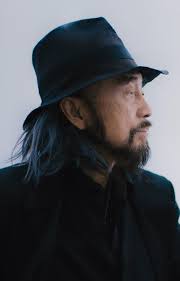
Introduction: Unveiling the Enigma
For more than four decades, Yohji Yamamoto has stood as one of the most enigmatic figures in fashion, a master of sculptural forms, a champion of androgyny, and a pioneer of the avant-garde. His name evokes reverence from students at fashion schools, awe from design purists, and admiration from global fans who recognize his unmistakable signature: sweeping silhouettes, asymmetrical tailoring, poetic darkness, and a philosophy deeply rooted in Japanese aesthetics. Yet, despite a career overflowing with accolades from the French government’s Ordre des Arts et des Lettres to honors from the Council of Fashion Designers of America, Yamamoto remains a mystery.
A new intimate documentary, “THIS IS MY DREAM,” directed by Theodore Stanley, attempts to penetrate that mystery. The short film offers a rare glimpse into Yamamoto’s creative process as he prepares a new collection for Y-3, his groundbreaking collaboration with Adidas. From the bustling streets of Tokyo to the fashion-forward studios of New York City, viewers are invited on a journey into the mind of a genius who, even after decades at the top, continues to question, innovate, and reinvent.
This is the story of Yohji Yamamoto the mysterious cloth maker and how his lifelong pursuit of beauty, imperfection, and truth continues to shape the future of fashion.
A Legacy Sculpted in Shadows and Silhouettes
Yohji Yamamoto’s influence on modern fashion cannot be overstated. Since launching his first collection in Tokyo in 1977, he has consistently challenged Western notions of beauty, elegance, and gender. His work sits at the intersection of rebellion and refinement.
Often described as the “poet of black,” Yamamoto once remarked in an interview with The Guardian, “Black is modest and arrogant at the same time. Black is lazy and easy but mysterious. It means I don’t bother you. You don’t bother me.”
His preference for monochrome palettes and exaggerated forms created a fashion language entirely his own one unmistakably Japanese but universal in appeal. By the mid-1980s, alongside fellow innovators Rei Kawakubo and Issey Miyake, Yamamoto had redefined the rules of Paris fashion with collections that were raw, intellectual, and unapologetically unconventional.
As fashion critic Suzy Menkes famously noted during his early Paris years, “Yamamoto doesn’t cut clothes. He sculpts them.”
It is this sculptural sensibility, combined with a refusal to compromise artistic integrity, that continues to set him apart.
The Man Behind the Mystery
Despite his monumental success, Yamamoto has maintained a strict separation between his private life and his public identity as an artist. Friends, colleagues, and journalists often describe him as thoughtful, philosophical, and deeply introspective, a man who chooses solitude over spectacle.
His reluctance to reveal too much makes “THIS IS MY DREAM” all the more extraordinary. Director Theodore Stanley recounts the delicate balance required to capture Yamamoto without intruding on his inner world:
“Yohji is a very private person and has maintained this privacy despite being one of the most intriguing working artists of our time,”
Stanley explains. “We needed to enter this world as outsiders but leave with images and words that allowed an intimate glimpse into the man’s interior.”
The documentary offers moments rarely seen: Yamamoto playing guitar, speaking unexpectedly about love and loss, and reflecting on what drives his constant reinvention.
In one particularly poignant scene, he muses, “Fashion disappears. Style remains. What I am trying to do is not fashion, it is more like trying to create time.”
These insights reveal a designer less concerned with trends and more focused on the emotional and spiritual dimension of clothing.
Y-3: Redefining the Future of Sportswear
At the center of the documentary is Y-3, one of Yamamoto’s most influential ventures. Launched in 2002, the label merged the elegance of Japanese tailoring with the athletic technicality of Adidas long before luxury sportswear became a global phenomenon.
Y-3 was not simply a collaboration; it was a new category of fashion.
A 2003 Vogue review put it succinctly:
“Y-3 is what happens when a philosopher meets a sports scientist.”
The documentary follows Yamamoto and the international Y-3 team through the development of the Spring/Summer 2010 collection, highlighting the intricate choreography behind each runway moment: design meetings, fabric selections, fittings, casting, styling, communications, and show production.
What emerges is a portrait of collaboration grounded in mutual respect.
For Adidas, Yamamoto’s conceptual rigor brought meaning to performance wear.
For Yamamoto, Adidas offered a platform for innovation unfettered by fashion’s elitism.
In a previous interview with Dazed, Yamamoto shared, “I wanted to create something that did not exist. Sportswear and fashion were in two different worlds. I asked myself: why?”
Y-3 became the answer and a blueprint for modern athleisure.
Behind the Curtain: The Creative Process
One of the documentary’s greatest strengths lies in its ability to observe without sensationalizing. Stanley, working with editor Zak Tucker, allows the creative process to unfold with a quiet, almost meditative rhythm.
The film opens in Tokyo, where Yamamoto is finalizing the collection. Fabrics sway gently under studio lights; assistants hover respectfully as he pins, cuts, and analyzes seams with microscopic detail. There is no chaos, only calm precision.
Next, the journey moves to New York City, where the energy shifts dramatically. Castings, late-night fittings, and show rehearsals bring intensity and tension. The viewer sees Yamamoto questioning proportion, adjusting drapes, and offering subtle but firm direction to his team.
His interactions are often minimal, but every word counts.
A stylist recalls in the film, “He can say just one sentence and the whole room understands the direction.”
That clarity, born of decades of experience, reveals a leader comfortable in silence and fluent in intuition.
Music, Melancholy, and Philosophy
Beyond fashion, Yamamoto is a lover of music particularly the guitar, which he often plays as a form of emotional release. The documentary captures this beautifully, intertwining guitar sessions with moments of reflection.
His music mirrors his design philosophy: understated, melancholic, introspective.
During one scene, Yamamoto reflects on imperfection as a source of beauty, echoing the Japanese aesthetic principle of wabi-sabi, the beauty of the flawed and incomplete.
“Perfection is ugly,” he says quietly. “I want to see scars, failure, disorder. I find that very Japanese.”
This philosophy permeates his work. Loose threads, unfinished hems, and asymmetrical seams are not mistakes but portals to deeper meaning.
The Documentary’s Vision
Theodore Stanley’s filmmaking background particularly his work with Bruce Weber comes through in the poetic cinematography. “THIS IS MY DREAM” is crafted with tenderness, observation, and respect for Yamamoto’s rhythm.
Stanley’s previous credits, such as Letter to True, Chop Suey, Boy Artist, and Chiara Clemente’s Our City Dreams, showcase his affinity for artists whose work straddles identity, vulnerability, and rebellion. His commercial collaborations with brands like Chanel, Vera Wang, and Ralph Lauren also inform his sensitivity to visual storytelling.
With Tucker’s editing, the documentary becomes less a behind-the-scenes feature and more a meditative experience, a diary of creation, philosophy, and expression.
A Visionary Who Remains an Enigma
Despite the documentary’s intimacy, Yamamoto remains elusive, perhaps intentionally. Viewers see more of him than they ever have, yet the mystery endures.
And maybe that is the point.
Fashion today often demands immediacy, transparency, and overexposure. But Yohji Yamamoto operates in a different dimension, one where artistry is sacred, privacy is power, and the self is secondary to the craft.
As fashion writer Cathy Horyn once wrote,
“Yohji is not a designer chasing relevance. Relevance chases him.”
This film does not decode him; it honors him.
Conclusion: The Dream Continues
“THIS IS MY DREAM” is more than a documentary about the making of a collection. It is a meditation on creativity, identity, and the quiet resilience required to remain true to one’s vision in a world of noise.
Through Stanley’s lens, Yamamoto emerges not only as a designer but as a philosopher, musician, mentor, and storyteller. His work across decades from Tokyo boutiques to Paris runways, from haute couture to Y-3 sportswear reveals a man constantly pushing boundaries while staying deeply rooted in his personal truth.
The film offers a rare gift: a glimpse into the inner world of a master who has devoted his life to shaping fabric, form, and thought.
Yet, true to his nature, Yohji Yamamoto leaves us with more questions than answers.
And in that lingering mystery lies his enduring power.
As he softly remarks in one of the documentary’s final scenes,
“A dream is never finished. You must keep walking.”
With “THIS IS MY DREAM,” we are invited to walk beside him if only for a moment into the beautiful shadows of his imagination.